In the name of shipping, I've typed this one fast and there are probably typos.
I offer no apologies, enjoy the imperfection.
I also plan to update this as I go, consider it a first draft, so do check back in later.
I've been building a community-led business for many years. In its earliest form, my journey started in 2007. It was 2011 when it became more formalised as a legal business entity. Then it was 2015 when we started building out our own tech.
The goal was to build sustainability into our business through membership offerings. We didn't want to be over reliant on conferences as an income. Little did we know that decision likely saved the business.
When COVID hit, it was the membership revenue from what we had built that kept the lights on and brought in additional growth. When we had to cancel and postpone multiple conferences, the membership base kept us going.
However, whilst we had started building our own website, we hadn't taken the focus of building our own platform. These are fundamentally different things. Our website was more content and membership focused that had to be managed by the staff. It lacked the ability to engage meaningfully. It was so hard to multiply the value.
Yes, we had a forum (we used and still use Discourse), which is a perfectly good tool for what it is, but the limitations are real.
Also, yes, many of the tools we used could be integrated with our own website, but it always felt incomplete. Or confusing, to us and the users. It most definitely slowed down our ability to just do stuff. Data was everywhere, it wasn't nearly as usable or helpful as it could have been.
And I honestly didn't realise how much it slowed us down until I said:
F*ck it. We have to build our own platform.
Excuse my language. I don't usually swear professionally, but I find it hard not to when I talk about this.
The safe for work version is: don't let the social networks have all the fun.
The annoying version is all caps: DON'T LET THE SOCIAL NETWORKS HAVE ALL THE FUN
If you want a hard to remember string of letters or hashtag, then consider using DLTSNHATF. I jest. I also jest about the trademark™ symbol. My sense of humour as I get older is questionable, for sure!
What do I mean by not letting the social networks have all the fun?
Come on. We're mostly fed up with them. Admit it. You know it.
I know many of us don't, won't, or can't. All I can say, is that when you see there is another way, then there is simply no going back.
It's not about going cold turkey with social networks. They will likely always serve some sort of purpose. Some are pure hell holes now. YouTube and LinkedIn are the better ones these days, at least from my perspective and needs. But there are still so many glaringly obvious gaps that need to be filled.
I love Bluesky and what they stand for. The Fediverse and what the likes of Ghost are doing is great too. This website uses Ghost, I love both the open source, fediverse nature of it and the direction it is headed.
Personally, Twitter/X and Substack are on my ban list because of Nazi bar reasons. I don't have time in my life to spend my time where hate is seeded.
Yet, all of these spaces make it hard to truly serve my people. For some reason, the world believes everything needs to exist on these big tech platforms, or nothing at all.
It's in their best interest that little people like me don't try to build something useful. That we are led to believe we can't do it. That their moat is too big.
"Don't build your own platform" is the advice that keeps going around, maybe this is propoganda spread by the big tech platforms too. They want us to rely on them.
But to be honest, it's not just the big tech saying this. It's every tool out there. For example, courses are part of our offering, every course platform out there also says "don't build your own course platform".
They make it seem like the solution is always to choose a ready made tool, that it will fix your needs, but the more we headed down that route, the more painful and restrictive it all became.
Sure, all these tools had a ton of features that we could only dream of, however, the reality is also that we don't actually need them. There's only a subset of things that we actually need or want. Everything else is just bloat.
But when we are forever and constantly digitally displaced, it feels like the only option is to build our own thing, on our terms. We have no control of the algorithms. And even "community platforms" are not immune to changing, getting acquired, or simply stop investing in new features and growth.
Having a place to call our own is not just about the list of features, it's also about sustainability, finding traction and being in control of our own data and destiny. All the platforms eventually hold us back, but by the time most people properly realise that, the cost of moving away feels too overwhelming.
I've heard and experienced this story way too many times, that I've felt like I have no option but to build my own platform, ie, don't let the social networks have all the fun.
My story about getting going from website to platform
TLDR; We had been building our own website, but I was frustrated, and I was desperate for a better product.
Slightly longer TLDR; There's a slightly longer story as part of this, which involved me taking a break from the business and coming back to a website that I was "not happy" with. It involved a very stressful year, and through that experience, I decided that we had to build something super special, or it just wasn't worth the personal pain for me.
I had to wake up to be inspired to create something amazing. Anything else was giving me way too much anxiety. This meant that not only did we have a ton to fix, but we also had to build new things. And our budget has always been tight. We have a tech team of 1.5 people. Maybe 1.75 on a very good day. 😁
I'm incredibly grateful for every bit of tech expertise we get, but our limits also mean that we can't waste time on what doesn't move the needle. It means that we have a traffic jam of features waiting to be built, but we only focus on 1-2 at a time. There's no point looking further ahead as ideas and priorities are constantly changing.
But building a community focused platform isn't just about the tech. It's of course about other people in the company and community. And of course, the constant juggling of business and product needs. And as I mentioned earlier, we had a website, we didn't have a platform. I wanted to change that.
The features we built that created the lightbulb moment
Honestly, some of this stuff seems so obvious in hindsight.
There was a turning point for me when I started believing that we could build a platform. I actually wrote about it here on Rosieland in October last year. It's nice to have that as a timestamp of where my head was at.
One important part of building communities is the fact that we create history. And as part of creating history we log stuff. One of the things we love to log in the modern day was photos.
So, one of the features that we built was called Memories. This was like our own Instagram. We shipped it. It was basic. It had an upload limit of 10mb when we first shipped. There were technical debt reasons for that (🫠), but that has now changed.
I'll emphasize that it was basic. Building our own Instagram basically meant uploading an image, adding a title, description, alt text and the ability to tag it.
It was simple and it served a purpose. We had just hosted a conference and we wanted somewhere to store photos of the event. And let me tell you, I was so done with posting some to LinkedIn, some to Instagram, and then keeping all the backups on a Google Drive somewhere that were never really used. I had had enough of that.
Our Memories feature was to tackle that problem. I wanted to ensure it was the start of always uploading photos of our events (and people) so that anyone could find them at any point in time.
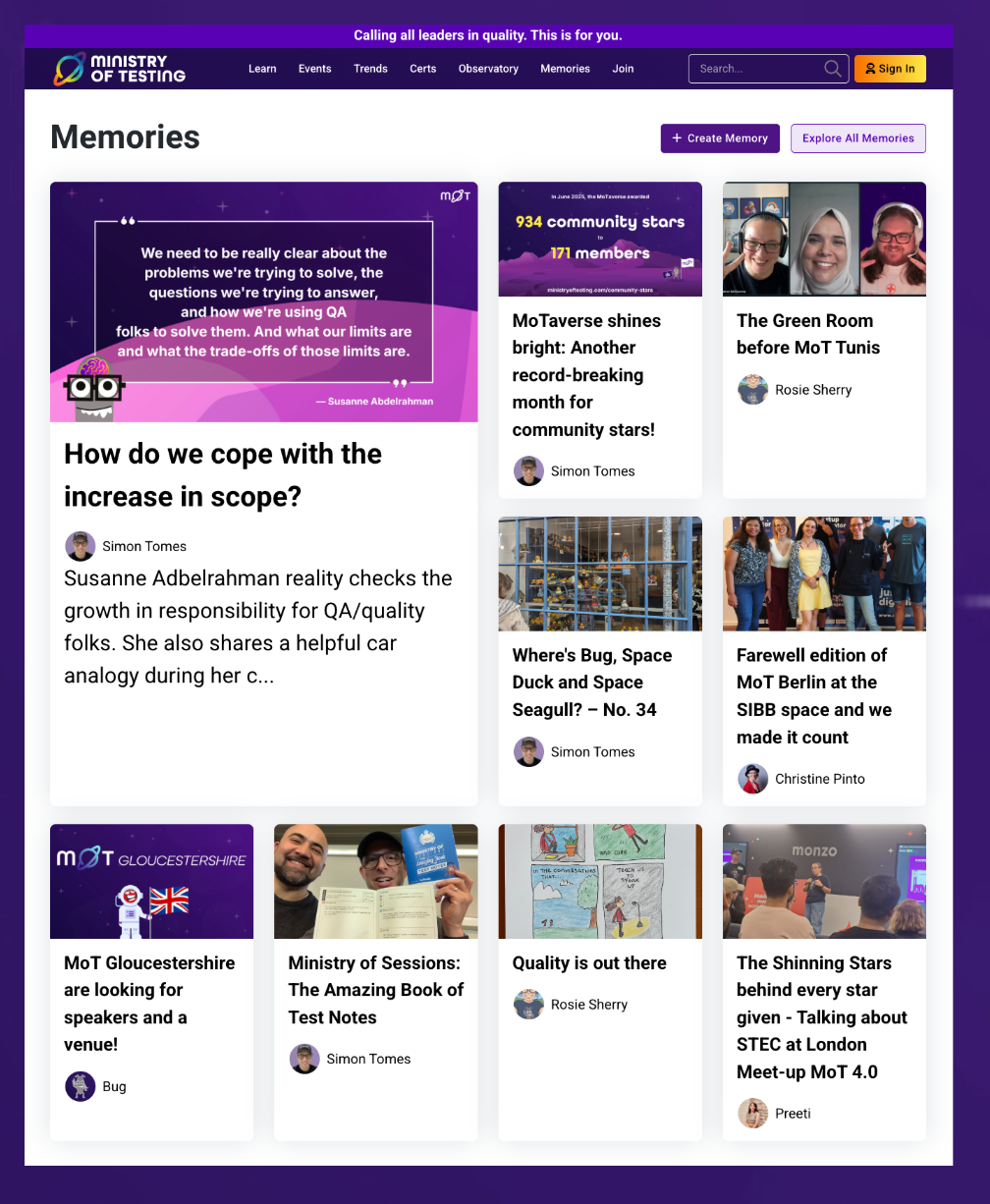
Here's what our memories landing page looks like today. We're mostly going for a news-y style layout. Might change our mind later about that, but for now, it works.
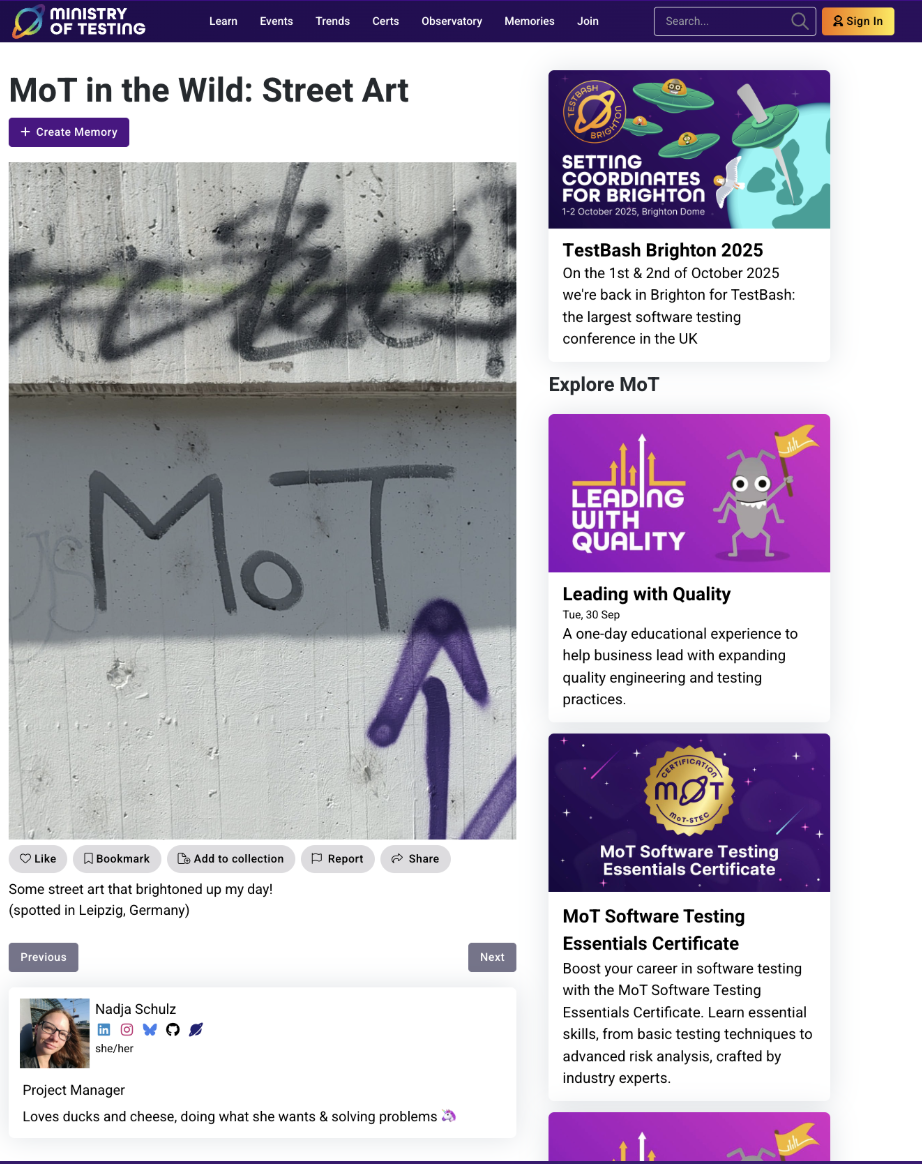
And here's an example of an individual Memory post.
The next thing we did was to create profile pages. And honestly, I wish we had done this from day one. This is really what started to change everything. It was what made me realise how we could do so much better at building community when we can get a glance of people's profiles in an instant.
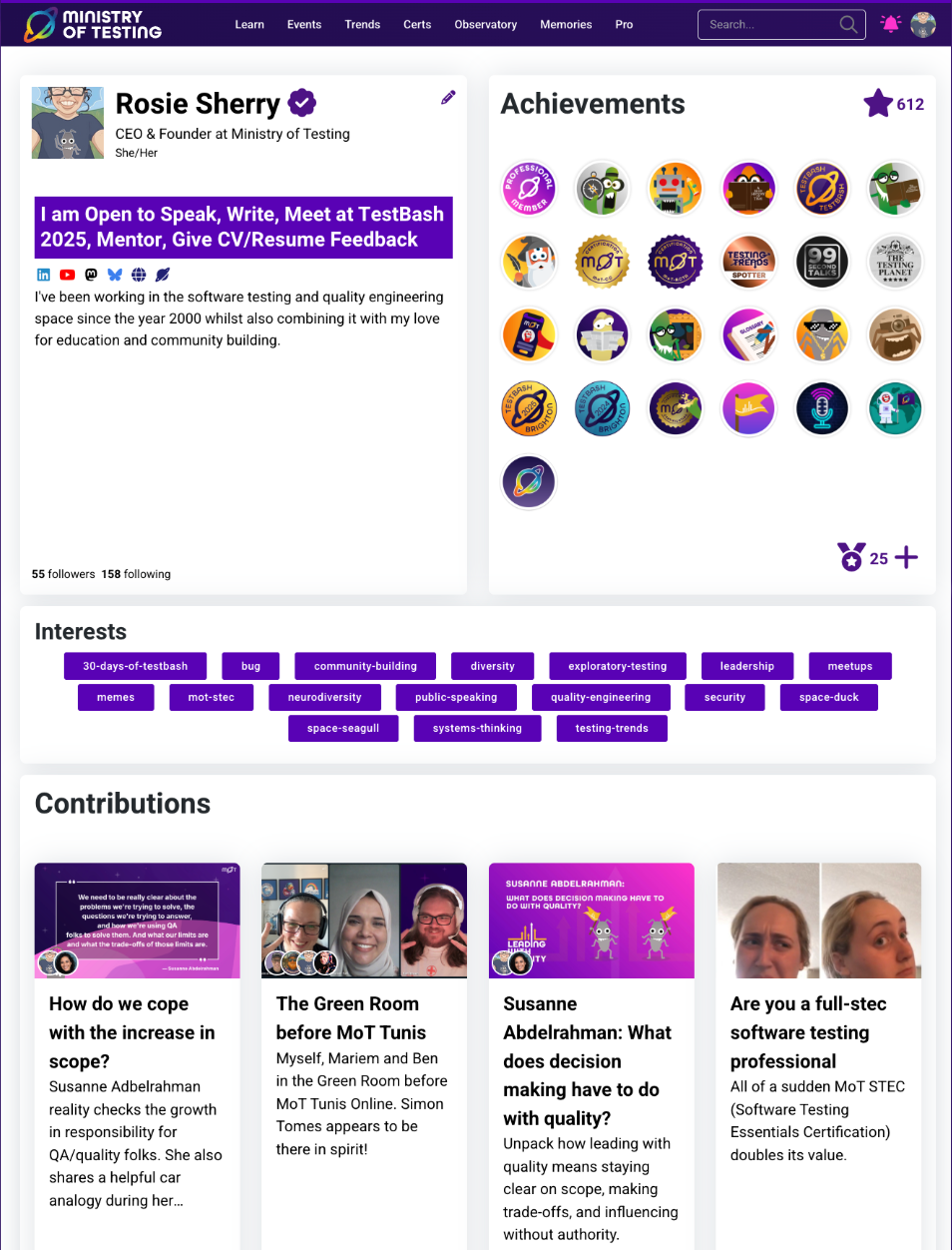
For example, it massively helped our everyday community operations efficiencies. Having a profile to review when someone submitted an article to publish enabled us to make decisions much quicker about whether to accept it or not. Prior to this, we would have to dig up their contributions on the forum, search our website and dig through our Slack and spreadsheets. That really wasn't fun.
We might have owned the data, but it was everywhere and not easily accessible. Profiles with connected data literally changed everything for us. And now, pretty much everything is connected to a profile page. Every contribution a person makes appears on their profile. It's not rocket science, but very, very helpful. Designed and constantly tweaked by us.
Building profile pages also meant we could finally ship our badges functionality. We shipped with a handful of basic badges, then roughly on a quarterly basis we would meet up as a team to brainstorm new badges. A commitment to the badges has meant trickling new ones in every month and members being pleasantly surprised when they receive an email about a badge they've earned.
Memories turned into our 'micro-blog' functionality. Aka, a social post, or a core piece of functionality. Initially, I had thought Memories would be separate to micro-blog style content, but we actually realised they could be the same thing. Memories are now used for photos in addition to shorter videos, gifs, or micro-blog style content. No new functionality was really required for this, just a change in how it was used by the people.
The next thing we built was "Community Stars", also referred to internally as a social capital system. This was built after we had been manually logging community interactions and manually awarding badges for their contributions via Discourse. It was super inefficient, and we did it for many months, but doing it manually eventually meant that we created a community algorithm that was clear, we felt happy with as a team and ready to build upon. The time it was taking to do it manually was also a huge justification to build it into our platform.
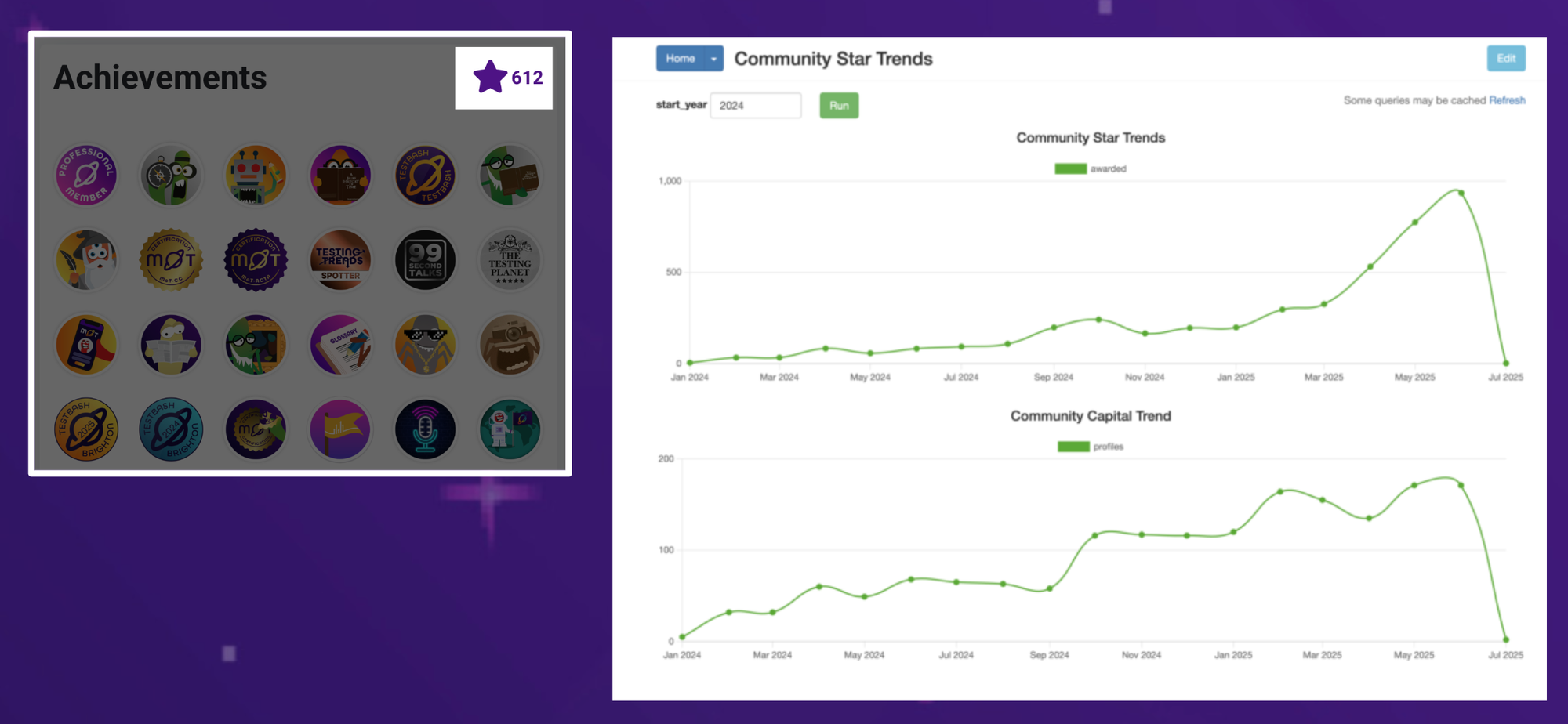
The community stars is still relatively new, it's been about 3 months since we built it. It's one of my favourite things. We're tweaking it constantly and frequently add new reasons for earning a star.
I love that we made the algorithm open. It cannot be gamed, at least, I don't think it can. Even if it can, at least people know the rules. I don't want to play any of this mysterious algorithm games. It's not my cuppa tea.
Our community algorithm based upon the behaviours we believe we lead to a better community. We reward contributions to the platform in addition to the good actions we may see elsewhere. A big chunk of it is automated, though some aspects to it are somewhat still manual, but this also makes it feel special and human too.
We also recently made it so that paid members can award community stars too. This adds a whole other layer of inspiration and fun.
The only way for us was to work in iterations
We're a small, independently funded team. We're trying to do big things with never enough budget.
The only way to work was with a bias towards action and working in iterations.
We had to get better at what was a priority. One feature improvement at a time. Shipping quickly. Releasing internally and many Slack conversations on how to improve it. The focus was on 'good enough', not perfection.
Then as time went on, we had built up a number of things that we were hand cranking behind the scenes. These ended up becoming a priority to build in. It was much easier to justify the investment because it would ultimately save our team members time.
As part of this we also improved how we communicated the updates to the community. First it was to a smaller group of within our community Slack. Then the more features we built, the more we used our platform to communicate the things we were improving.
It was important that people saw what we were doing. And people have noticed, it feels so good! I am inspired and optimistic for the future. I truly believe we can build something that is both special and valuable.
And this, and that!
I could go on and on about features we have been building. We had a follow button on profiles for quite a few weeks that didn't actually do anything. We then built a following feed...and...and...and...and I'll likely update this post as and when I have time with things we've been up to.
But the point is not the features.
The point is that, after a long period of anxiety and generally being disillusioned with the world of (community) tech, I've been inspired.
Lessons from not letting the social networks have all the fun
Creativity replaces anxiety
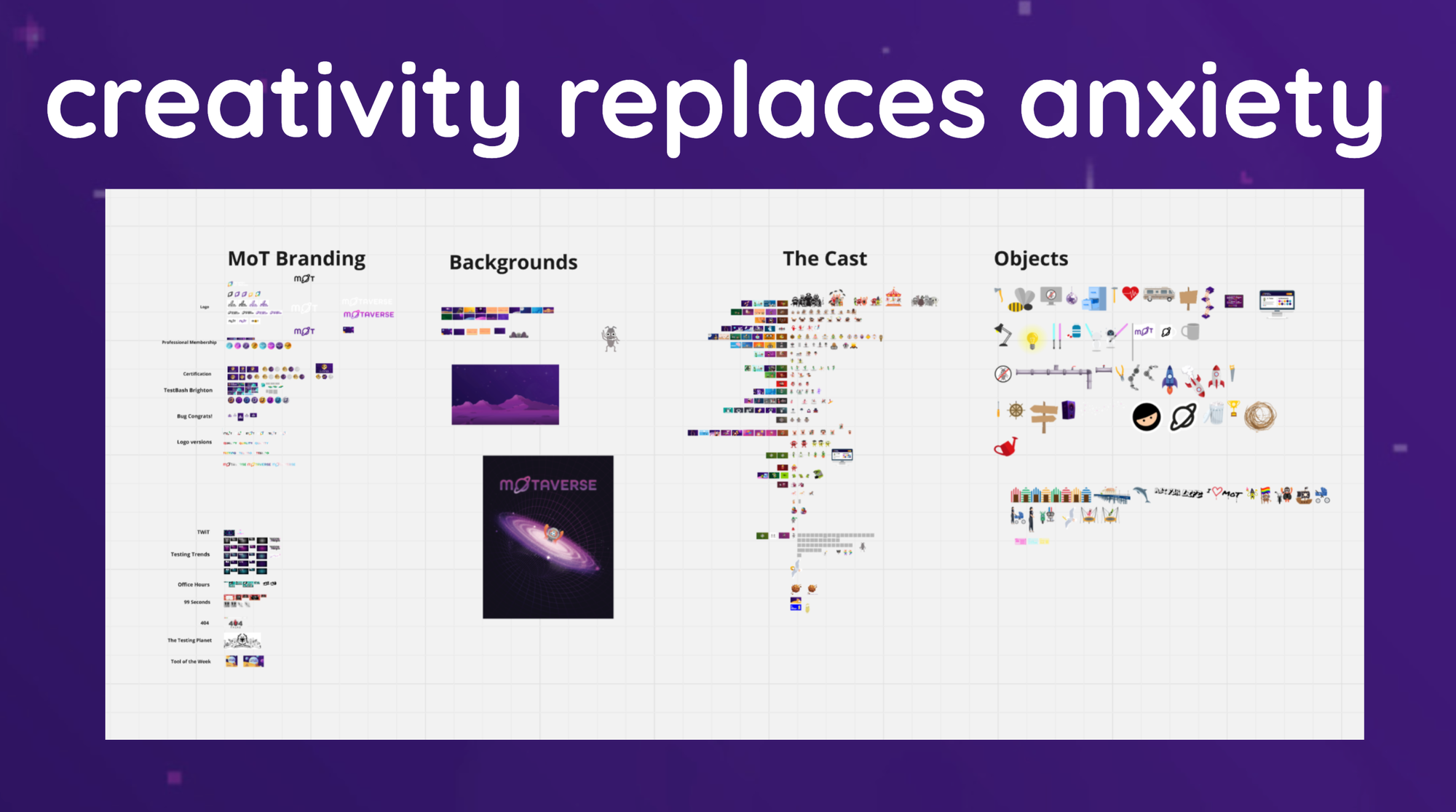
When we build our own thing it unleashes creativity and as I was going through the most anxious time of my life I held onto a phrase I learned: creativity replaces anxiety.
I interpret this as the fact that when we are being creative, anxiety has no choice but to f*ck off because creativity simply leaves no room for the anxiety.
And I truly believe this has happened to me. I adopted creatvity in both my personal and work life. We've embraced fun everywhere we go. We rebranded and sneak in our new bug mascot wherever we can. I initially thought Bug was the most boring thing ever, but it only took a bit of creativity to make Bug the centre of the MoTaverse. Bug makes us laugh. We hide bug into the majority of our images. And the best bit is we can now tell our people (software testers and quality engineers) that they need to find Bugs on our our website.
It is silly. But it makes us laugh every day. And that matters when we are building something that has the odds stacked against us.
Community is systems work
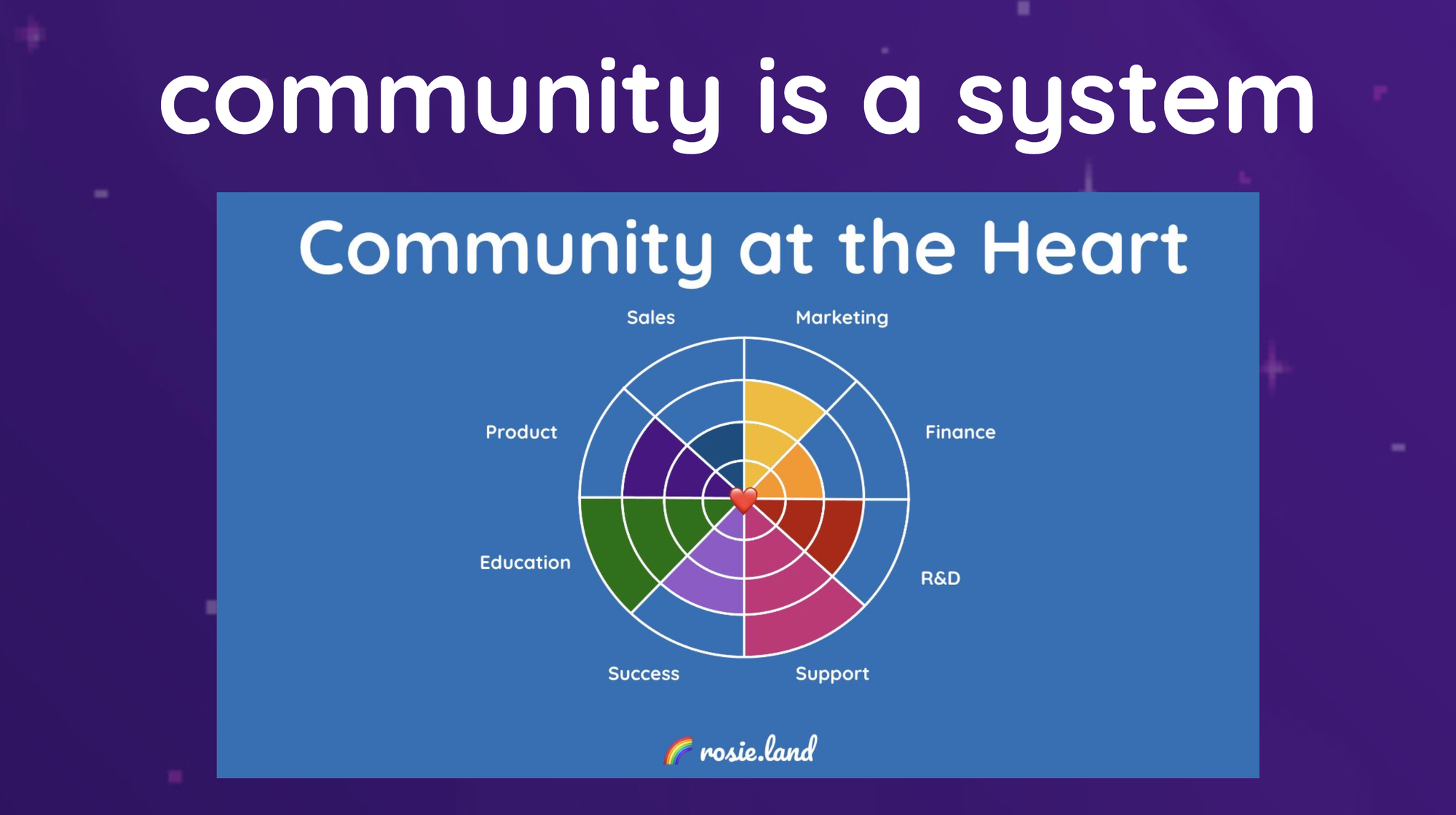
The community industry has suffered a lot from statements about what we are not.
For example: We are not marketing. We are not social media. We are not an email list. We are not an event.
And to be honest, I got tired of it. It's not helping us. Because when community is systems work, we have to understand we are all those things. We are glue work. We do all those things. We should love and embrace it. Our work needs to be spread across the organisation. We cannot exist in one isolated space. It has never worked. It never will.
As community people we have to find ways to seed our community insights into all parts of the business.
Own your own data
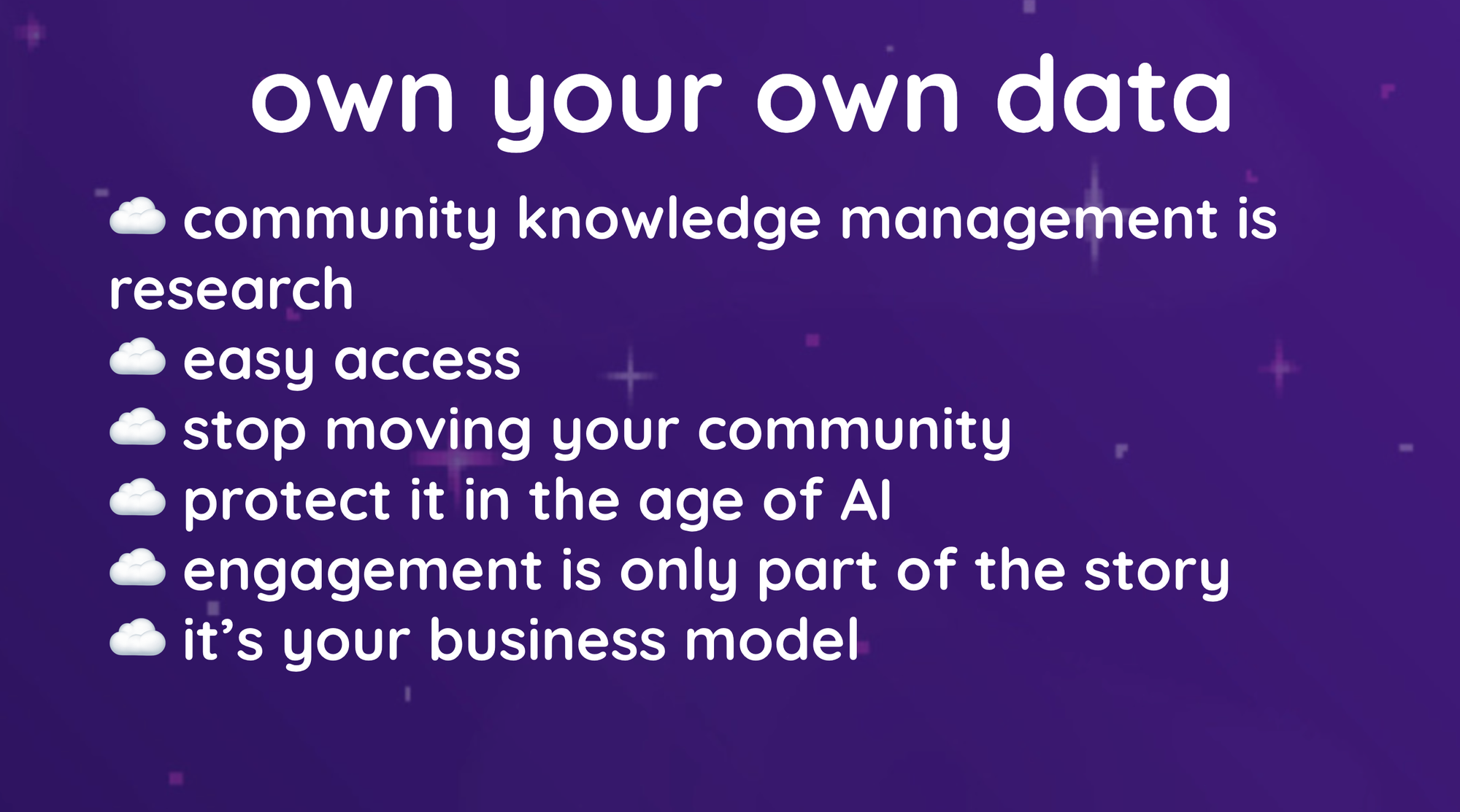
And even when you use a community platform that says you own the data, it doesn't mean you can actually make good use of it.
To me, owning your own data is only meaningful when you have real control and flexibility around it. Many of the community platforms say you own data, and you do, but migrating away from communities is still a royal pain in the butt, if not impossible to do well from a tech perspective, let alone a UX one.
To me, building our own platform means that we look at every interaction and seek to improve it at any given opportunity.
It's fun and positively infectious
The more I share about this, the more people's eyes light up. Since I first started talking about this people have been reaching out to me asking how. They've been showing me their progress and ideas.
I will share more as I go, but in the name of shipping this post, I'm going to stop after I say one more thing.
I've never had so much fun in my life focusing on this. I have a twinkle in my eye as we build. It doesn't mean it's easy. It is not. I'm exhausted at times, but, contradictorily, I also have more energy than ever.
The twinkle in my eye, is also now the twinkle in other people's eyes. The more I talk to people,as people reach out, the more I see them get excited about not letting the social networks have all the fun. It's truly happening!
We can all build our own thing. We can become sustainable. And have fun along the way.
🐌